25 January 2009

The Matchstick Man by Christopher Mlalazi
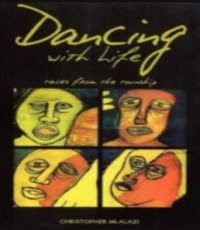
His feet a blur that even seemed not to touch the tar, the Matchstick man flew along the street. Behind him chased a police car, siren baying, and its roof light flashing red murder. On either side of the street, like daring spooks, other red flashing lights chased other Matchstick men on jerky shop window reflections.

Cutting across a corner, he slipped on a banana peel, tumbled down, and skidded forward on his stomach, the tar shredding his dungarees in a loud abrasive screech.

The street suddenly writhed into a turn - he shot straight on out of it and into Independence Square.

A gold statue of Her Excellency, astride a rearing black granite bull, was mounted in the middle of a stretch of dry grass, right in his path. Behind it smiled the country's palace, built of pink marble, and its door guarded by two lions in diamond studded leather neck collars. The lions were both licking their lips - they had just devoured a little boy dressed in an opposition party t-shirt who had dared pass by the door. Around them were scattered tufts of human hair, dentures, toe nails, and the head of a penis. The latter, blitzed by furious bottle green flies, was flipping around like the freshly cut off tail of a lizard.

The Matchstick man slammed into the plinth, head first. There was a loud cracking sound, like a gunshot, and his head burst into sizzling red flame. The granite bull bellowed in alarm, it leapt from the plinth, over the flames, and thundered towards the door of the Palace, clods of soil raining behind it from its hooves. The alert lions already had the door open. Gold and granite disappeared into it, and the two lions slammed the door shut from inside.

Fanned before a ferocious wind, flames raced hungrily across the dry grass following the scars of the bull's spoor, smoke and ash swirling thickly above them.

They beat the fire with acid statements in the state media - the radio, TV, and newspapers. They tear gassed it, set police dogs on it, truncheoned it, shot at it, and, finally, the two lions subdued it at the Palace door. They put it in a strait jacket, raked its face with their sharp claws, drawing blood, then carted it away still struggling to nobody knew where except an unnamed grave deep in the sacred forest behind the Palace in which was rumoured resided the maimed spirits of silencing.

'There is no cure!' The media bansheed. Her Excellency appeared on the lofty steeple of the Palace, on her forehead jutting a pair of tiny horns, singing the 'No Cure' anthem in a deep male voice. Drums beat across the orange sky, horns trumpeted, and feet stamped. The blue sun closed its ears with its fingers, its face a grimace. Then, displeased, it strode west over the border of the horizon, and darkness prematurely opened its terrible mouth over the capital.

***


One unsuspecting afternoon, the Matchstick man re-appeared in the streets again, wearing a red t-shirt emblazoned in white in front; 'Will Anything Ever Change?' In his hand he carried an aluminium briefcase. His head was a black char, from which his eyes burned with a cold defiant fire. A faint sulphurous smell emanated from him. Borne on a powerful current not felt on the ground, vote campaign leaflets raced overhead on light wings like the scattered thoughts of the hungry.

The Matchstick man opened his mouth in dismay at the sight that met his eyes. He only had two front teeth, which were on his lower jaw. Obese rats, clad in long leather jackets, felt hats, and dark sunglasses, strutted about the streets, double barrelled shotguns balanced over their shoulders. Infants with emaciated faces peeped with dead eyes from the broken windows of buildings. Dogs bayed in the rubbish strewn alleys, and the sun, arms akimbo, the corners of its eyes moist, squinted at the Matchstick man from the sky with hope in its heart.

The Matchstick clicked his briefcase open, took out a sheaf of papers from inside, and then closed it again. Then, frowning heavily, he glared at the statue of Her Excellency. In her smouldering eyes was reflected the double images of a stooped old man about to cast a vote into a transparent ballot box emblazoned 'Uhuru' in rainbow colours on one side. A cock in militia uniform held a machine pistol to the back of the old man's head. The old man cast his vote, and then also jumped into the slit after it. The cock grinned, and, with a magician's flourish, sealed the slit with masking tape. It fluffed its feathers, cocked its head and crowed lustfully. Then it lugged the ballot box on its shoulder, and the double images strutted away deeper into the eyes of the statue and then vanished.

The Matchstick man rifled through his papers, his brow furrowed in intense thought. The two lions manning the door of the palace were pumping dumb bells, sweat coursing down their swollen muscles. The sun coughed, and a momentary blue heat wave scorched the earth. The matchstick man wiped sweat off his brow, and then he approached the statue, a defiant look on his thin wood face. A starved looking red locust was looking into a hand mirror on the plinth, sharpening its teeth with a whetstone.

The wail of a siren, and a red fire engine slewed around the corner, tyres squealing, and raced towards him. The Matchstick man stood his ground. It skidded to a stop in front of him. The buildings on either side of Independence Square straightened their shoulders, and all became deathly silent. One could even have heard the footstep of an ant that stood with one foot poised in mid air at the side of the plinth had it decided to step forward. Its eyes, a look of dread in them, were fixed on the fire engine, its mouth half open.

'What do you want?” The Matchstick man shouted at the fire engine.

'I have come to put out your fire - orders from above!' the fire engine shouted back.

The ant, carefully, placed its foot down, then, crouched low, it slowly retreated backwards and disappeared into a crack on the side of the plinth. A grain of sand slammed into the opening of the crack from inside, sealing it.

'Where is the fire?' the Matchstick man asked, opening his arms at the fire engine. 'For I do not see it.'

'It's in your crazy head!' the fire engine's teeth were bared in a snarl.

'How can you put out a fire that is not yet born?' the Matchstick man asked. 'What kind of a fire engine are you?'

'Do you want to see?' The fire engine hissed and revved its engine.

Its siren started wailing, and it hunched its back, as if about to pounce, but its side door opened and six cockroaches jumped into the street from it, all carrying AK 47 rifles. They aimed them at the Matchstick man, standing in a neat row. The sun frowned, and its blue rays started wind milling slowly clockwise.

The Matchstick man squinted at the sun, his eyes brows arched, and shafts of blue light revolving across his face as if he was an extra terrestrial zebra still deciding on its colours. Then his eyes hardened, and he nodded his head, understanding the solar message. The blue rays detached from the head of the sun and floated south, hugging the flat belly of the sky like the tails of invincible kites.

'Reach for the sun!' the cockroaches all cried out at him in falsetto voices.

'Why?' the Matchstick man asked.

'Because of orders,' one of the cockroaches replied, sliding its rifle into automatic.

The others all did the same.

'But you are firemen,' the Matchstick voice was amazed. 'Your job is to fight fires, and not to kill innocent citizens. Are you sure you are not confused?'

'It is you who is confused,' the cockroach replied, its feet now dancing.

'We are itching for a fire-fight!' another cockroach.

'Why do you think I am confused?' the Matchstick man asked.

'Orders from above,' all the cockroaches chorused, all their feet also now in blurred dance.

The shot gun toting rats appeared from the entrance of SHEFS ONLY NICE SEX MASSAGE PARLOUR. The cockroaches screeched in terror, leapt into the fire engine, which raced away, tyres squealing, and disappeared into an alley.

The rats came up to the Matchstick man.

'Are you crazy?' One of them asked him, taking off its sunglasses. Its neck and wrists glittered with gold chains.

'Definitely not,' the Matchstick man replied.

'They could have killed you. Don't you know there is no cure for the incurable?' the rat said, eyeing him from under the brim of its felt hat.

'I have the formulae for everything incurable of this universe,' the Matchstick man said.

The rat smiled slyly at him. 'Good man,' it said, hitching up its trousers. Its belt was of crocodile skin, and its silver buckle was encrusted with jewels from all corners of the universe, with a gold butterfly as the centre piece. 'Very good, maybe, after all, there is a cure.'

'Yes it's there,' the Matchstick man said.

'You are very intelligent.' The rat gave him a gold-capped smile. 'Very very intelligent. You shall go far, that I can see.' The gold butterfly detached itself from the rats belt buckle and they watched it flutter up into the air. Then, in mid air, it changed into an eagle and surged powerfully towards the sun, quickly disappearing from sight. 'As far as that eagle,' the rat finished, pointing at the sun with its shotgun.

Then it looked at the Matchstick man from the corners of its eyes.

The other rats lowered the brims of their hats, grunted and nodded their heads as if in support of the Matchstick man, and also casting him oblique looks.

There was silence. In the sky, the sun took out a pair of binoculars, crouched down, and squinted through them at the group before the gold statue. The Matchstick man was looking at the spot on the rats belt buckle from where the butterfly had launched itself first into innocent life and then into a bird of prey. A tiny gold fly glowered back at him with eyes that pierced through his and out of the back of his head. The Matchstick man screwed his eyes shut from this laser stare, but his eyes felt not there, only holes where they had been. He opened his eye lids again, and discovered that he could see. His eyes were still there. He quickly averted his eyes from the belt buckle.

The silence was broken by a hacking cough from a pile of leaves. The rats all swivelled around, their shotguns pointed in that direction. The leaves convulsed. A human foetus, dressed only in farmer shoes, and its body glistening with mucus, stood up from underneath them and staggered away up the street. An unpleasant odour drifted to them from its direction.

'Bloody state abortion doesn't want to die,' the rat said. It turned to the Matchstick man. 'So where is your formula, my friend?' Its voice was silky. 'Maybe we can assist you achieve your goal. Only AIDS has no cure – what's eating you anyway?'

The Matchstick man pointed at the statue with the sheaf of papers. Countless silver bees now buzzed around its head, some sitting on it, some on its shoulders, as if they were the scales of a prehistoric animal.

'I have decided to first present my petition to her, then I will go to the underworld and visit the people wherever they are hiding, because, as you can see, the streets are now empty, nobody dares walk them for fear of their lives. But life is a divine gift from the spirits that has to be lived to the full without – er, okay, let me read to you-'

The papers had disappeared from his hand, and so also his briefcase. He raised his eyes. The rats had disappeared too. He stood before the statue, his mouth wide open.

'Read,' sneered Her Excellency from her imperious perch on the bull. 'For one with only two teeth, I see you are a very astute young man.'

All the bees took off from the statue and buzzed into the sky, filling it with silver stars in broad daylight. Their shadows speckled the whole of Independence Square, making it seem as if tiny mirrors were scattered all over it.

The bull tittered. It feinted with its right hoof, the Matchstick man ducked, and it belted him with a granite left to the forehead. The air exploded into more shiny bees, and he was hurled back and landed butt first on a patch of molten tar in the street. The tar splashed upwards, and rained down on him again like inward folding petals, plastering him flat to the empty street with a single shiny blood red star sizzling in his mind.

The two lions at the Palace door snarled, threw their dumbbells down and leapt forward, muscles bunched. But they could not find the Matchstick man. Two eyes in the tar watched them disappear down the street, their noses casting for scent. When the lions were reduced to dots, the Matchstick man dragged himself up from his tar bed. He was now black all over. Needle thin infants quickly gathered around him, laughing noisily, and pointing fingers at him.

He walked away in the opposite direction to the lions. More needles poured from doorways, from the alleys, from manhole covers, and followed behind the Matchstick man.

'They have not silenced me!' the Matchstick man was raving at the air. 'They will never silence me!'

The air eyed him with ageless silence.

'This is only a temporary set back of the army of emancipation, but it shall regroup, the commander shall scream attack, and it shall open its bibles and read virtuousness and civil rights from it, and they shall wilt and crumble before the avalanche of the stones of their words. Hearken my people, there is a cure!'

'There is no cure!' The needles behind him chanted. Their foul breath buffeted the Matchstick man's back, but he walked on without glancing behind him.

The rats lined the tops of the skyscrapers, their arms around angelic faced women, and pointing at the Matchstick man and squeaking in laughter. The tall rat shredded the Matchstick man's petition and threw the papers into the wind. Then he threw the briefcase into the sky also, and all the rats took pot shots at it with their shotguns, hitting it again and again, until it was in small pieces. In the distance behind the briefcase, the sun was hard put ducking the zinging buckshot.

'There is a cure for all the man made ills of the world!' the Matchstick man raved, ignoring the pieces of briefcase and bits of paper raining all around him like wedding confetti.

The procession left the city behind them. It followed the road as it wound up the air towards the sky along a coiled sunbeam.

'There is no cure!' the needles chanted.

'There is a cure if you want it. My papers were stolen, but I have the formula in my head, and that they shall never erase. I am going up this blue celestial road to scrawl it across the sky in big sun-letters, so all those who bother to look up from the mire of their lives shall be saved.'

'Your ghonoreal prick!' Her Excellency screamed from the far distant spire of the palace that projected over the tops sky scrapers. Her back was stooped under the roof of the sky, making her breasts sag down, and her skirt ride high behind her, exposing the backs of veined thighs. In her hand she held her zip zapping truncheon. The sun touched Her Excellency's back.

'Excuse me kind mother - can I please pass?' It asked in a soft voice.

Her Excellency moved aside, still stooped. The sun walked past her after the disappearing Matchstick man. As it passed, Her Excellency's face tightened, and her eyes became a hyena's, cold and glittering. She bit her lower lip and touched the sun with the crackling truncheon on its back. A white bolt of lighting flashed from the sun and lashed across the sky, followed by an ear splitting crack. Darkness swallowed the sky as the sun's filament blew. The sun became a weakly shining moon, and it limped after the Matchstick man on an ethereal avenue.

The Matchstick man toiled towards the sky, now following a coiled purple moonbeam. His body was now a translucent shimmer in the darkness, and behind him the kids all carried yellow flaming torches above their heads.

'Mad man! Mad man! Mad man!' the needles were now chanting as they approached heaven.


The Matchstick Man was written by Christopher Mlalazi.


Copyright Christopher Mlalazi 2008.


(The Matchstick Man first appeared in Dancing With Life and other Short Stories published by ama'Books Publishers, Bulawayo, Zimbabwe.)


Christopher Mlalazi writes prose, poetry, drama (TV and stage), and also children's fiction.


In 2004 he received the HIGHLY RECOMMENDED citation in the Sable Lit Mag/Arvon (UK) Short Story Contest. In 2007 he was shortlisted for the HSBC PEN SOUTH AFRICA SHORT STORY CONTEST, and in 2008 he was awarded the OXFAM NOVIB/PEN FREEDOM OF EXPRESSION AWARD.


He has published short stories in Zimbabwe, Europe, as well as on the web, and was also published in the 2005 Cain Prize Anthology (Orbituray Tango),the 2006 Edinburgh Review, and the 2007 AFRICA PENS. In winter of 2009 he is publishing his debut short story in The Literary Review (USA).

Currently he is working on a novel he hopes to finish by mid 2009, if not earlier, and has a stage play under rehearsal.

On the 14th of Feb 2009, Christopher was awarded the NAMA in the Outstanding First Creative Published Work category for his debut book, a collection of short stories called Dancing with Life.


11 January 2009

UK Lucy by Sarudzayi Chifamba-Barnes

Hands shaking and her whole body shivering from fear and anxiety, Maria quickly parked her car in front of the two-bedroom terraced house she rented in Coventry. Her eyes were filled with fear when she saw three police cars parked outside her house, and neighbours peeping through their lace curtains to view the incident. A few people passing by also looked at her house in amazement. For a moment, Maria thought that she had turned into the wrong street and parked her car at a wrong house. She looked around to scan the street, and just then an elderly white neighbour came outside with a small watering can in hand partly to water her plants outside her house, and mainly to pry on what could have possibly befallen her African neighbour she never bothered to get to know. A few houses away, she saw streams of buyers coming out of Mr Patel's fruit and veggie corner-shop and taking a few moments to look towards her house.

A strand of spittle escaped from her agape mouth and settled between her two breasts in her bra. She slammed the door of her Ford Fiesta and ran to the house. She did not bother to lock her car. Even a would-be thief would be deterred from stealing her car by the presence of such a police convoy. Not that there were any car thieves in that area, apart from the undisciplined youths who would seize an opportunity like that to use the car for joy-riding and the police chase they enjoyed watching on The Bill television programme. Because the door of her house was not locked, and with heart beating fast, she pushed it open.

'Where is Lucy? Where is my baby?' she shouted when she saw Tindo her boyfriend slouched on a couch and in handcuffs. A group of police officers and forensic experts were combing her house thoroughly, as if they were looking for a tiny pin.

So this is how the tragic story of Lucy, a young Zimbabwean girl who fell prey to a rapacious sexual monster,began. Young Lucy lived in the city of Coventry. Along with her mother, Maria, and her mother's boyfriend, Tendai or Tindo, as he was popularly called, lived in a two-bedroom apartment in Coventry, in the United Kingdom. Maria had left Zimbabwe as the country was evidently starting to go throw a political and economic meltdown. As with most young Zimbabweans, the dire circumstances and the clear lack of hope had forced Maria to leave her child behind so she could eke out a decent living, not only for herself but her daughter and all the immediate members of her family. Leaving a four year-old young child behind was a painful sacrifice, even under the custody of a trusted sister. Maria joined the exodus of Zimbabwean immigrants flocking to Britain, synonymously called London by Zimbabweans. However, Maria did not have much of a choice. Despite her tears, Maria consoled herself by working very hard to save enough money to bring her daughter to the United Kingdom where she had secured a tough but well-paying job.

It was on a memorably snowy Christmas morning when mother and daughter were re-united. The previous day, Lucy, then seven years old, had been put on an aeroplane from Harare to the UK, accompanied by an air hostess who handed her over to her extremely elated mother at Gatwick Airport. It was a very emotional reunion between mother and daughter. For three long and protracted years, mother and daughter had been living in different countries. For a mother, three years of separation from a beloved child is taxing on the spirit.

'As soon as I sort my papers out, I will send for her,' Maria wrote in letter after letter to her sister as she inquired about her daughter. 'I need to get my papers in order, and then you will be here with me, love,' she told Lucy each time she phoned Zimbabwe and asked for a few minutes to chat with her beloved daughter.

'There is no need to overstretch yourself, amainini. Lucy is my daughter, too, and she is in good hands,' Maria's sister said, to put her young sister's mind at rest.

Maria worked hard to look after three families. In the UK, she had to pay astronomic monthly rent for a single room, in addition to purchasing food and other basic necessities. Back in Zimbabwe, Maria had elderly parents who lived in Njanja rural area. By custom, the onus was on her to take care of them. In Harare, Maria had to financially support her sister's family, too, Lucy's custodian. Lucy found it very tough, especially as she was working illegally waiting for her asylum case to be decided. She tried to change a status by filing asylum papers.

Initially, her asylum claim was denied but, after an appeal and a tribunal hearing, she was eventually granted refuge status grudgingly by a grumbling immigration officer. After securing a legal status, Maria moved into the bedroom she was renting to a house that had two bedrooms. With the help of the Refuge Council, she applied for a family reunion visa to be reunited with her beloved Lucy, who arrived in England on that fateful Wednesday morning, on a Christmas day. Maria hugged her shy daughter, kissed her on the cheeks, patted her on the back and drove her daughter to Coventry in her old Ford Fiesta.

She took Lucy to Coventry where she showed the little girl her bedroom and showered her with many presents, Barbie dolls, play stations, clothes, a bicycle and name it, anything that Maria thought would make up for the three lost years when they were living apart. Lucy was happy. She had a bedroom to herself, a television set in her bedroom and above all, her mother to herself alone. For young Lucy, it was as if she was Alice in Wonderland. Lucy felt like a princes.

In Zimbabwe, she slept on the floor in a crammed room with her five cousins like canned sardines. In Coventry, she had the television all to herself, when in Zimbabwe he had to watch television with her aunt's family, including some neighbours and lodgers. The television set in Zimbabwe looked pathetic by comparison. It was a small-screen television set located in their lounge-cum-dining-cum-bedroom for the boys. The aerial of the television was equally poor so much so that the television's reception of the airwaves was very erratic. It showed misty, shadowy images no matter how much her uncle, Babamukuru, tried to fiddle with it. On good days, they would receive good pictures with bad sound quality, and on bad days, it would just be these shadowy images, but everybody seemed to like and treasure the television.

In addition to poor picture and sound quality, the stuff that was shown on the television was horrible. It was as if the ZBC lacked good producers or better equipment to keep producing good programmes for children. Lucy and her cousins enjoyed the advertisements more than the news and adult programmes that her aunt, uncle and other adult viewers preferred to watch.

Now, there she was, in Coventry, in a very big house just for the two of them, all those presents, which were enough to share with dozens of other kids in Zimbabwe! Immediately after arriving in Coventry from the airport, Maria bathed her daughter Lucy in a lovely warm bath. Lucy loved the soothing and refreshing bath. For her, it was lovely to wash in that bathtub filled with warm water and scented bubble bath. In the Zimbabwe she had left behind, bathing was carried out in the toilet, in which her aunt filled a big metal dish with gallons of boiled water, and bathed all the small children in the same water, one after the other, scrubbing them with a rough stone and using the same piece of flannel. After the bath, Lucy put on some warm and cosy clothes. Maria gave her daughter some food before driving her to her friends' houses to introduce her newly arrived daughter, showing off with her. Lucy thought she would miss her aunt and cousins, but no, she forgot about them in the first few weeks of settling in Coventry.

Soon it was New Year, and her mother took her to the local council authority where Lucy was enrolled at a school a few streets from where they lived. Maria bought her daughter the required uniforms, shoes, socks and stationery. When the schools opened, she took her daughter to school. The new pupil was warmly welcome by the class teacher, Miss Parker.

Bringing Lucy to the U.K. and getting her settled in school solved two pressing problems. However, a new problem cropped up. Maria now faced the harsh reality of single motherhood away from the core family that had made her burden lighter when she was still in Zimbabwe. Unless she could find a babysitter, Maria could no longer leave her house to go and work at will, as she used to do before Lucy came. Lucy needed to be taken to school every morning. Even if she knew how to get there herself, the regulations did not permit young children like Lucy to travel to and from school on their own. There were many cases of paedophiles that preyed on small-unaccompanied children and molested them, or did worse things like raping them before killing them.

As long as she had day duties, Maria could, to a point, take care of her daughter's school needs with minimum assistance. Night duties posed the toughest challenge for Maria. Maria was a Care Assistant at a Care Home for the elderly. There were times when she had to work at night. With Lucy living in the UK, it was no longer possible for Maria to work at night because she could not leave her daughter home alone at night. Maria knew other parents who locked their children in the houses and went to work but she firmly decided not to do that.

'What if a fire breaks out?' she thought, 'or if something happened in the area and the police came and knocked on the door and discover that Lucy was by herself?' She knew someone who had been charged with negligence of duty of care and the children were put under the care of social services.

Nevertheless, Maria did not want to just give up her job and claim benefits because of childcare problems. If she did that, she would still encounter the same childcare problems when she started her nursing training. She had applied for a place to study nursing, and had been accepted at Coventry University. She knew training as a nurse was hectic and required her to undertake some placements in hospitals and nursing homes. She asked her friend Tina for advice.

'Maria, you see most of us living in this country without our families and you think we don't love them? It is all because of these school-runs and shift work. We decided to leave our children in Zimbabwe with families and relatives. Send her back to Zimbabwe and bring her back when she is old enough to go to school on her own, and when she can stay at home at night on her own as well,' Tina advised.

Tina's advice was partially true. However, she did not tell Maria that she would have liked but could not bring her own children to England because she did not have the legal documents to do so. Tina was living and working illegally, although she told people that she had secured an immigration status of leave to remain in the country. The truth was that she envied Maria and her daughter, but pretended to be the realistic parent who knew the problems of childcare in the UK.

'I don't think sending her back to Zimbabwe is an option for me,' Maria said.

'Why would it not be an option, and what other options do you have?'

'Well, your children are being looked after by your husband, their father. My daughter was under the care of my elder sister who has a bigger family of her own...'

'What about your parents? Send her to your parents.'

'My parents are too old to care for Lucy. Besides, they live in the rural areas. I cannot make my daughter to go and live in the rural areas,' Maria was adamant.

'What about Lucy's father, where is he?'

'Tina, I never got married to that man. He was a married man and never wanted to have anything to do with Lucy. It was only after he discovered that I was working in the UK that he has started paying Lucy some visits and buy her a few things. Maybe it's because he separated from his wife, or because he is begging me to bring him to the UK, so he is now playing the nice father,' Maria said.

'Maria, bring him here and make him look after his own child then. By doing that you will be killing two birds with one stone. You use him to help you with childcare, and you also have a man in your life. He can marry you then, or you can dump him later on,' Tina laughed as she spoke.

'I will never do anything like that Tina. That man ill-treated me and I am not taking him back. What if he comes and remains loyal for a few months and then goes to live with another woman? The idea of bringing the scoundrel to the UK on my visa! No, I will not do that,' Maria declared.

'Then send Lucy to Zimbabwe. Your sister will continue to care for her, or send her to a boarding school in Zimbabwe.'

Maria thought for a while, 'No, I can not do that. I think in the meantime I have to use a childminder who can take Lucy to school and back. I will stop working nights and work in the days. Ya-a, I know now, that is what I will do.'

Therefore, Maria engaged a childminder, Susan, who lived a few houses away from her, to take Lucy to school. Susan took a group of other children to school and cared for them after school. Maria changed her working schedule, from nights to days and the plan worked for a while, although she forked out a lot of money to pay the childminder. Soon she realised she could not afford to keep sending money to her parents and sister. Maria was under tremendous financial strain. She was struggling to cope with other bills.

The answer to her childcare problems came when she met Tendai at a friend's birthday party. Tendai was a very handsome person, a few years older than Maria. He told Maria that he had just moved to Coventry from Slough in Berkshire. He was living with friends in Coventry, he told her, while he looked for his own place and a job. They exchanged phone numbers, and the following day, Tendai phoned Maria to arrange a date. Soon he became a regular visitor at Maria's apartment. She introduced Tendai to her daughter whom he graciously accepted and took pleasure in assisting with her homework. Watching the two of them together made Maria realise that maybe it was time to have a father figure in the house for the sake of her daughter. Tendai moved in, and assumed a fatherly figure to Lucy. Because he was not working, he suggested on taking Lucy to and from school. Not wanting to disappoint her newfound love, Maria agreed.

Tendai had a very dark secret, which he did not disclose to Maria. He was HIV positive and taking antiretroviral therapy. He did not tell Maria that the real reason he fled Slough was because one of the numerous girlfriends he had there, Michelle, had just found out that she was HIV positive and was forcing him to take a test too, to know his status. Michelle was an English woman and a single mother of three. Before she met Tendai in a nightclub and slept with him, she had taken a routine HIV test, which came back negative. She suspected she had contracted this virus from him, and only wanted to check if Tendai was aware of his status before meeting her or not. However, fearing prosecution, Tendai abandoned his job and fled to Coventry. He had not disclosed his status to Michelle or any of his other girlfriends. He preyed on naïve and gullible single mothers, who found his charm towards children irresistible.

Occasionally Maria saw Tendai taking pills in the morning and nights before going to bed everyday, but he explained to her that he had a heart problem, and needed medication for the rest of his life for the heart ailment. Blinded by love, and not wanting to upset her boyfriend by being too inquisitive, Maria accepted the explanation without doubts.

If they were antiretroviral, Tendai would not take them in front of me. He would certainly try to hide them, and besides, when we spoke about using condoms he told me he had recently had an HIV test which came back negative, and he even showed me a note from his doctor to support that, she thought. Therefore, they had agreed to use contraceptive pills instead of condoms that acted as both contraception and a barrier against sexually transmitted diseases. Tendai had made it clear to Maria that he was not ready for another child; he had left a son in Zimbabwe although his mother had married another man.

'I want to marry you first before we can talk about having a child or children of our own. I want a white wedding,' he said to her. She melted with love. However, what she did not know was that Tendai feared that if Maria fell pregnant, the midwives would recommend an immuno-deficiency test for her since she came from a high-risk area. Even though the tests were not compulsory, Maria would certainly accept them because he had made her believe that he was negative, and she assumed her status to be negative as well, since she had never bothered to take a test herself.

Tendai had also not told Maria that the reason it was taking him so long for him to get a job in Coventry was that he did not have the legal documents to do so, his visitor's visa having expired six years before they met. He never bothered to regularise his stay by enrolling in colleges and universities like most immigrants from Zimbabwe. Like the biblical prodigal son, he lived each day as it came, frequenting nightclubs and getting involved in multiple sexual relationships. Tindo was on a mission to spread the virus to as many people as he could, since it was also passed on to him unknowingly. 'I am not going to die alone,' he vowed when he was diagnosed after falling ill with tuberculosis and being hospitalised for a few months in Slough.

Tendai took Lucy to school everyday, brought her home and taught her homework. With time, Maria became very trusting and began to work on nights and days again, so that her income would be sufficient to feed herself, Lucy, her family in Zimbabwe and now her new boyfriend. She bought clothes for Tendai's son and sent them to Zimbabwe. She also bought his parents some clothes and sent them money as well. She wanted them to like her, love her and fulfil that old age saying that a relationship is empty unless it is sanctified with food - ukama igasva hunozadziswa nekudya.

Little by little, Tendai began to feel trapped in his relationship with Maria. The initial blazing flames of love were getting reduced. He missed clubbing. He was a playboy, just playing the right person because he did not have a job of his own and accommodation of his own. He felt weaker because he could not provide for himself. Maria's apparent success made him jealousy. It was humiliating that Maria, a woman who could put food on the table for herself, her child, her parents and sister but he, a man could not. She had a roof over her head, a job, and a nursing career to look forward to. Maria had just started nursing studies, spent more time in libraries and placements, while he was expected to take Lucy to school and look after her when her mother was busy.

Tindo was painfully aware that his life lacked direction. Moreover, he missed drinking beer with friends, driving from one city to another in one night in search of good night clubs or good women. He missed attending Tuku's shows whenever he was touring the UK. However, without Maria's generosity, he knew he had nowhere to go. In Slough he had escaped the authorities by lying to Michelle that he was returning to Zimbabwe on an urgent family business, mumbling something like his father had died; therefore, he would come and sort out the HIV test when he returned. With Maria, he felt his male ego destroyed. He began to be physically abusive to Lucy.

One day Maria returned from a placement and found Lucy crying. Her hands were bruised from beating. However, when she confronted Tendai, he would not have any of that. He packed his bags and threatened to leave.

'What do you want me to do with your spoilt child? I take her from school and she does not want to come home with me. She wants to play in the playground with other children. I manage to bring her here and help her with her schoolwork. She does not want to do that either. She tells me I am not her father!' He said packing his things.

'Did you say that, Lucy? What did you say to uncle Tendai, child?' Maria wanted to beat her daughter, who cried aloud denying the allegations. Maria wanted to believe her daughter, but then she had heard other friends, single mothers like her, talking about how difficult it was to date when you have a big child.

'So I am now the liar in this house? Maria, I am not going to let you and your daughter abuse me because I do not have a job. I am going back to Slough,' he said, throwing things in his bags.

Maria slumped in a chair. She knew that if Tendai left, she would have to arrange childcare for the following six weeks she was doing placements.

'What do you take me for, Maria, your childminder?' Tendai asked.

Maria began to weep. She pinched Lucy's ears. How can this child not be grateful to Tendai for helping me with taking her to school and back home? How can she not see that Tendai is a saint in our life? Maria wondered. She eventually made peace with Tendai and the next few weeks things returned to normal.

However, since that episode, Lucy became very withdrawn, both at home and at school. She confined herself to her bedroom whenever her mother and Tendai were around. Maria and Tendai began the habit of locking her in the house on her own when they went out at night. Tendai started to go and drink again especially on nights when Maria was not around, leaving Lucy to fend for herself.

As the elders said long back, a bird does not forget its old tunes. He was used to many lovers and not just a lonely desperate woman. He began to loathe Lucy. He wanted Maria's undivided attention. He became a control freak, sulking for no reason, which Maria quickly found an explanation to, as a man who was frustrated with looking for a job. She countered that by working more nights and showering him with presents.

Lucy's unhappiness grew. She missed Zimbabwe, her aunt and the numerous cousins she had. She grew tired of eating microwave food, which she reheated several times. She grew tired of eating pot noodles, which she prepared herself. The fridge was full with eggs, bacon, milk, yoghurts, there were loads of fruits and cereals to choose from, a lot of bread and biscuits, all those foods did not mean anything anymore to her. She missed sitting on a reed-mat in her aunt's kitchen in Zimbabwe and sharing sadza served with tsunga and covo vegetables with her cousins. In Zimbabwe, they did not always get meat on many meals, but those meals she shared with her cousins were meaningful meals. They were shared with love and warmth. The roasted chicken, plenty of rice and salads in her mum's house in Coventry were meaningless as this food was consumed in sorrow and solitude.

The big bed she slept in, too, became worthless since most of the time she cried herself to sleep. She missed sharing the small mattress she used to share with her cousins in her aunt's kitchen, and the pulling and tagging of the blankets they shared, because all those were shared with warmth and love. She missed going to school in Harare, because even though they did not have modern facilities as they had in Coventry, they enjoyed playing games like pada and nhodo, which they played in the school ground after school before they each walked home on their own to their parents. In Zimbabwe, no parent feared any paedophiles. Now in Coventry she spent most of her life locked in a big cold house. Even the big television screen, the forty-two inch wide plasma in her mother's lounge, or the small plasma in her bedroom, did not make any sense at all. These electronic gadgets brought her no joy. She missed the television set in Zimbabwe, which showed people with shadowy figures. She became totally miserable.

Her mother's house became hell whenever she was left in the care of Tendai, but as she blossomed into a big girl, Tendai began to see her with different eyes. He missed his independence as the prince of nightlife, the numerous lovers, and saw the answer in Lucy. He began to molest her.

'You will not tell your mother, will you, or no one at school, because if you do so, no one will believe you and I will tell your mother to send you back to Zimbabwe. Do you want to go back to Zimbabwe, where you see people starving everyday on the news?' he asked her.

'No, I don't want to go back,' she replied, frightened, even though part of her was willing to go to Zimbabwe.

'I will tell your mother to send you back and you will never come here again. We will get married and move houses, and you will rot in Zimbabwe with no mother at all, do you want that?' he asked again, grinning.

'No, I don't want that,' she replied.

'So from today onwards you behave yourself. You are here only because I want you to be here. If I tell your mother to send you to Zimbabwe, she will do so without any hesitation. In addition, if you tell anyone at school, they will not believe you and they will put you in jail for lying, or separate you from your mother forever and put you in a children's home. Do you understand that?'

'Yes I do,' she replied, choking with tears, because she could not imagine life without her mother, in Zimbabwe or in jail or children's home.

'Right, come here,' he pulled her towards him and began to fondle her. He kissed her. He touched her small minnie. He began to abuse her sexually. He robbed her of her innocence and transformed her life to adulthood.

At school, Miss Parker noticed a change in Lucy. She called Lucy into her office and asked her if there was something wrong with her, but the thought of being sent to an institution away from her mother made Lucy not to tell.

At home, Maria noticed things seemed to have changed for the better. Her boyfriend no longer harassed her daughter. She took it that Lucy had now accepted Tendai as a stepfather to be, and that Tendai had realised that Lucy was not a threat to their life anymore. Until one day, when she came home from a placement and found three police cars parked in her patio.

The front door was closed but not locked and there were twelve police officers, both male and female officers inside the house. There was also a team of forensic experts ransacking every room, especially Lucy's bedroom. They gathered her pants, unwashed linen and pyjamas and put them in specially marked bags. Tendai was handcuffed and sobbing. Feeling hazy, Maria walked into the house, looked from Tendai to the police, but she did not see her daughter.

'Where is my daughter? Where is my baby, Lucy?' she shouted.

'Are you Maria, Lucy's mother?' one officer asked.

'Yes, yes, I-I am. What happened? Where is Lucy?' she asked as her legs buckled under her and she slumped onto the carpet.

'Come into the kitchen and I will explain to you where your daughter is,' a female officer said, helping Maria to her feet and took her into the kitchen.

'Your daughter is in hospital. She has been admitted after the school found that she was struggling to walk. When they called a nurse in, they found that she had a sexually transmitted infection…!'

'What?' Maria asked in disbelief.

'She had a sexually transmitted infection. The doctors did tests and realised that she has been sexually violated for a very long period. She has accused your boyfriend for repeatedly raping her, that's why we are here...'

'Oh my daughter, my baby…!' Maria cried.

'And one more thing, where you aware of your boyfriend's HIV status?'

'What do you mean if I was aware of Tendai's HIV status? Of course he told me and showed me a note from his doctor, which stated that he was negative.'

'Oh, I am sorry he lied to you. He is HIV positive. He has more charges to answer with the police in Slough as well. The doctors think there is a danger that he might have passed on HIV infection to your daughter so they are running more tests…'

'Yowe amaihwe-kani!' Maria wailed plaintively as she felt her whole world falling apart. She could not believe her ears. She grabbed a knife from the kitchen cupboards and sprinted into the lounge, where she began to curse Tendai. She wanted to lung the knife at Tendai, but the police told her they would arrest her if she did that. She went to her bedroom where she banged her head on the headboard and began to cry. She heard the police officer telling her that Lucy was now under the care of social services since she had failed to provide a duty of care to her daughter. Maria was not allowed to visit her daughter in the hospital on her own unless if she was accompanied by a social worker. Maria paid no attention. Her head was thronged with many unanswered questions to care about the gravity of what the officer was saying.


UK Lucy was written by Sarudzayi Chifamba-Barnes

Copyright Sarudzayi Chifamba-Barnes 2009.


I am a writer and publisher. I work with aspiring Zimbabwean and Southern African authors who want to get published. I am currently studying Law with University of London. I write articles commenting on the political situation in Zimbabwe for various newspapers including The Zimbabwean Times, The Zimbabwean and The Harare Tribune. I am a freelance journalist.


StoryTime: Weekly Fiction by African Writers.
All works published in StoryTime are
Copyrighted ©.
All rights reserved.